
Table of Contents
AP Chemistry Study Guide: Complete Exam Prep & Review
By Tim Alcantara, Forest Trail Academy
The AP Chemistry exam is a challenging yet rewarding opportunity for high school students aiming to earn college credit through rigorous coursework. This comprehensive guide is designed to equip students with essential concepts, effective study techniques, and strategic practice approaches to excel in the exam. Students will learn the fundamental principles of AP Chemistry, tips for managing their study time, and insights into the exam’s structure and format. Many find the intricacies of chemistry daunting, but with structured preparation and the right resources, success can be achieved. This article will delve into the essential concepts, practice techniques, study materials, study strategies, and time management tips, providing a roadmap to mastering the AP Chemistry exam.
Essential Concepts
Understanding the fundamental principles of chemistry is crucial for success in the AP Chemistry exam. Key topics include atomic structure, chemical bonding, stoichiometry, and thermodynamics, which lay the groundwork for advanced concepts. The College Board outlines seven big ideas central to AP Chemistry, which encompass the nature of matter and energy, the structure of substances, and chemical reactions. By thoroughly grasping these concepts, students enhance their analytical skills and problem-solving abilities—essential for achieving a high score on the exam.
Practice Techniques

Effective study practices not only reinforce knowledge but also build test-taking confidence. Here are some essential practice techniques:
- Regular Assessments: Engage in self-assessments through sample tests to identify strengths and weaknesses.
- Hands-On Laboratory Skills: Participating in laboratory work aids in understanding theoretical concepts through practical applications.
- Simulated Exams: Taking practice exams under timed conditions closely mimics the actual testing environment.
After mastering these techniques, students may benefit from enrolling in AP Chemistry courses that provide structured learning, including AP Chemistry exam preparation.
Study Materials
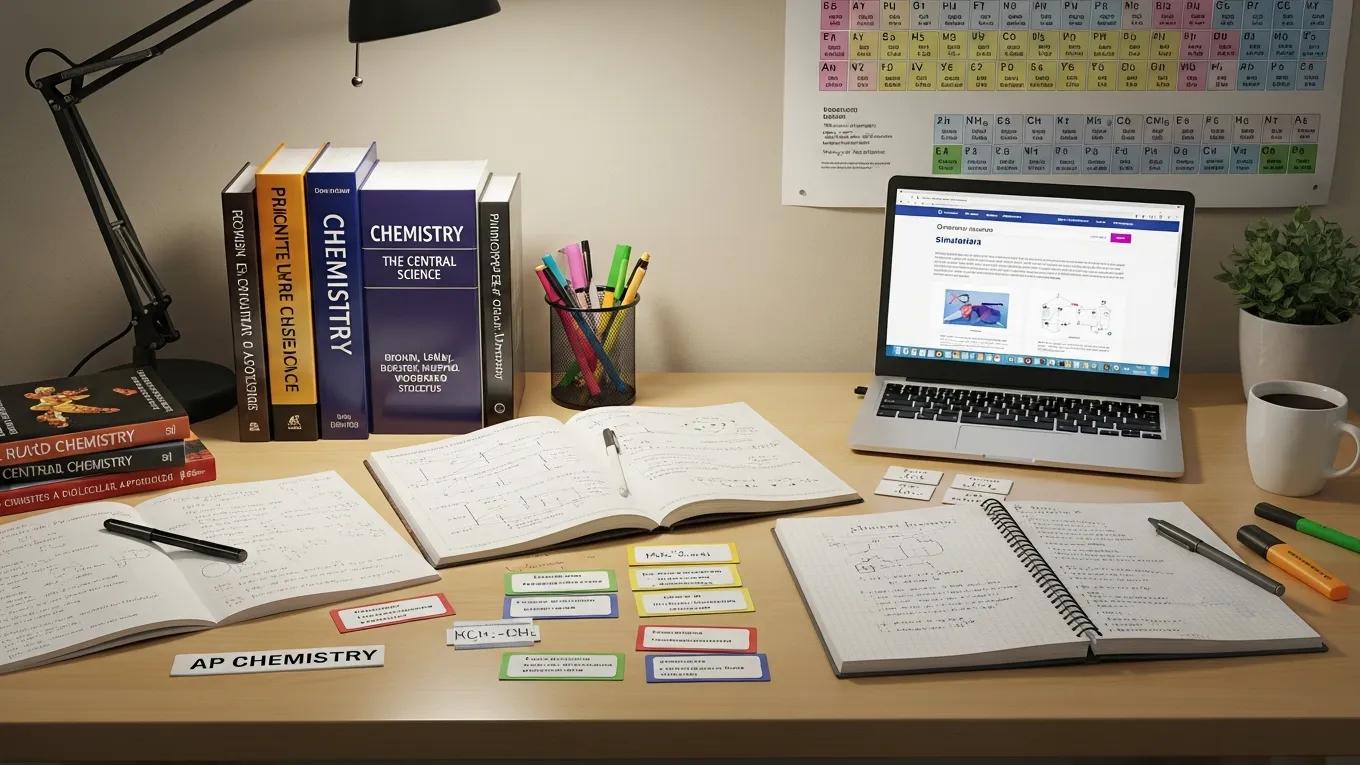
The right resources are vital for effective studying for the AP Chemistry exam. Here are valuable materials:
- Textbooks and Online Resources: Comprehensive textbooks and reputable online platforms offer structured content and practice questions.
- Past Exam Questions: Access to previous years’ exam questions helps familiarize students with the exam format and question styles.
- Interactive Labs and Simulations: These engage students in the learning process and reinforce understanding of complex concepts.
Forest Trail Academy provides a range of online resources which assist in bridging gaps in knowledge, ensuring that students are well-prepared for the AP Chemistry exam.
Study Strategies
Effective study strategies can enhance retention and understanding of complex chemistry concepts. Key strategies include:
- Active Recall: Utilizing flashcards and practice questions encourages active engagement with the material.
- Spaced Repetition: Scheduling study sessions spaced over time optimizes recall and reduces cramming.
- Peer Teaching: Explaining concepts to peers reinforces knowledge and identifies any gaps in understanding.
Implementing these strategies will significantly contribute to exam readiness.
Time Management
Managing study time effectively is a critical component of exam preparation. Here are some tips for creating a structured study schedule:
- Set Specific Goals: Define clear, achievable study goals for each session.
- Allocate Time Wisely: Determine the amount of time needed for each subject area to ensure comprehensive topic coverage.
- Regular Breaks: Integrate short breaks to maintain focus and avoid burnout.
By organizing study time and committing to a structured approach, students will cover the material more effectively.
What Is the Structure and Format of the AP Chemistry Exam?
The AP Chemistry exam is composed of two main sections: multiple choice and free response. Understanding the organization and emphasis of each section is essential for targeted preparation.
How Is the Multiple Choice Section Organized and Scored?
The multiple choice component entails 60 questions, designed to test a range of topics covered in the curriculum. Each question typically has four answer choices, and students receive one point for each correct answer. Importantly, there is no penalty for incorrect answers, allowing students to attempt all questions confidently.
What Should You Know About the Free Response Questions?
Free response questions require a deeper understanding of chemistry concepts and the ability to communicate those ideas clearly. There are typically 7 free response questions on the exam covering different themes and requiring problem-solving skills. Familiarizing oneself with scoring guidelines can greatly enhance performance on these questions.
Which Core Chemistry Concepts Are Essential for AP Chemistry Exam Success?
Identifying core concepts is vital for students seeking to excel in the AP Chemistry exam. Emphasis should be placed on understanding:
- Stoichiometry and Chemical Reactions: These form the foundation of the exam, where students must grasp mass-mass conversions and identify limiting reactants.
- Thermodynamics and Chemical Equilibrium: Key principles like enthalpy and entropy are crucial for answering relevant exam problems.
How Do Stoichiometry and Chemical Reactions Form the Exam Foundation?
Stoichiometry involves the calculation of reactants and products in chemical reactions, essential for various exam questions. Students must confidently perform mass-mass calculations and recognize limiting factors in reactions to succeed.
What Are the Key Principles of Thermodynamics and Chemical Equilibrium?
An understanding of thermodynamics, including concepts such as enthalpy changes and entropy, aids students in addressing questions related to energy changes in reactions. Concepts of dynamic equilibrium and Le Chatelier’s principle play a significant role in the exam’s questions.
How Can You Effectively Use AP Chemistry Practice Questions and Formulas?
Utilizing practice questions and a solid understanding of formulas are integral to effective exam preparation. This section provides strategies to optimize your study sessions:
- Practice Question Strategies: Focus on dissecting practice questions to understand common mistaken answers and test-taking techniques.
- Importance of Formulas: Familiarize with essential formulas, as they are often pivotal in solving problems during the exam.
Where to Find High-Quality AP Chemistry Practice Questions and Mock Tests?
Students should utilize reputable sources for practice questions, such as textbooks, online educational platforms, and past exams from the College Board to ensure quality content.
How Does Reviewing a Formulas Sheet Enhance Exam Preparation?
A well-structured formulas sheet provides quick references that aid in solving questions more efficiently. It ensures that critical equations are easily accessible during practice and actual testing.
What Are the Best Strategies and Tips for Tackling the AP Chemistry Test?
Students can maximize their performance in the AP Chemistry exam through strategic preparation and test-taking techniques.
Which Multiple Choice Strategies Maximize Your Score?
Approaching multiple choice questions strategically involves eliminating clearly wrong answers, allowing educated guesses on uncertain questions. Practice developing this skill through mock tests.
How Can Time Management and Calculator Policies Impact Your Performance?
Understanding the calculator policy is vital, as students may be limited in their use during certain sections. Therefore, honing mental math skills and practicing problems without reliance on calculators enhances preparedness.
How Does Environmental Chemistry Integration Enrich AP Chemistry Learning?
Integrating environmental chemistry into the curriculum enriches the understanding of chemistry by connecting it to real-world applications. This emphasizes the relevance of chemistry in contemporary issues such as climate change and sustainability.
For those interested in exploring further educational opportunities, various online high school curriculum options are available, including AP Chemistry.
What Are Practical Applications of Environmental Chemistry in the Curriculum?
There are numerous practical examples of environmental chemistry, such as the study of pollution effects, which highlight the importance of chemistry in environmental protection and conservation.
How Does Forest Trail Academy Leverage Outdoor Studies to Support Exam Prep?
Forest Trail Academy’s unique approach to intertwining environmental studies with AP Chemistry not only enhances learning but also inspires a deeper connection to the subject matter. This outdoor educational perspective fosters environmental awareness alongside academic growth.
What Are the Enrollment Options for AP Chemistry Courses at Forest Trail Academy?
For students interested in taking AP Chemistry courses, various enrollment options are available that cater to diverse learning needs.
How to Access the Online High School Curriculum and Study Resources?
Students can access Forest Trail Academy’s online curriculum by visiting the academy’s website, where they can find information about course offerings and registration steps.
What Personalized Learning Plans Are Available for AP Chemistry Students?
Forest Trail Academy provides personalized learning plans aimed at addressing individual student needs and learning pace, ensuring that every student retains a solid understanding of AP Chemistry principles.